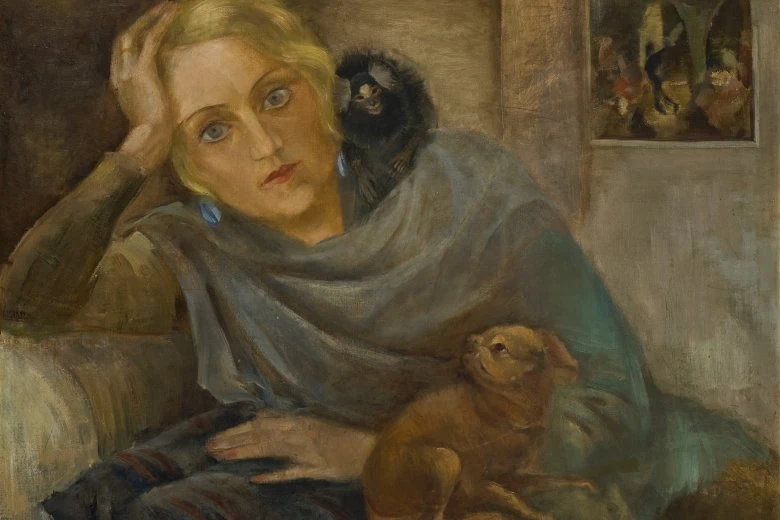
The exhibition "Melancholia imaginativa" reveals the peculiarities of Aleksandra Beļcova's portrait painting. The theme of melancholy has a long history in European art. In ancient times, "melancholia" (translated from Greek as "black bile") was considered not only a characteristic of one of the temperament types, but also an ailment that negatively affected a person's thoughts and psyche.
The Renaissance changed the attitude of thinkers and artists towards melancholy, which began to be regarded as a sign of genius, thoughtfulness and scientific inquiry. The philosopher Marsilio Ficino gave this type of melancholy the name "Melancholia imaginativa".
Since ancient times, art has developed a tradition of depicting melancholic images. In Aleksandra Beļcova's painted portraits, this tradition takes on an individual tone. The vicissitudes of the artist's life, her long illness with tuberculosis and, to a certain extent, her tendency towards introversion determined the treatment of images that fit into the typology of "Melancholia imaginativa". In both her self-portraits and her portraits of other people, Beļcova emphasized a mood of bright sadness in moments of contemplation.
The exhibition provides a brief insight into the history of the concept of melancholy and the iconography of melancholic images, offering visitors both previously unexhibited works by Aleksandra Beļcova and already familiar portraits, which take on new meaning in this context.