Rumbula is one of the largest Holocaust sites in Europe, commemorating the thousands of Jews murdered there during World War II. Today, the memorial complex stands as a solemn place of remembrance, reflection, and historical testimony, carefully designed to preserve both the physical traces of the tragedy and the memory of its victims.
The creation of the memorial
Based on a design project by architect Sergejs Rižs, the memorial ensemble was opened on 29 November 2002. The ensemble was funded by donations from Latvian, Israeli, American, and German institutions and organisations, as well as private donors.
Remembering the tragedy
On the way to the memorial aside the road, you can see a metal construction symbolising the Nazis. Next to the road there is a stone explaining that this was the road to death for thousands of Jews. This monument was paid for by the former ghetto prisoner Boriss Kliots, whose parents and sisters were killed at Rumbula.
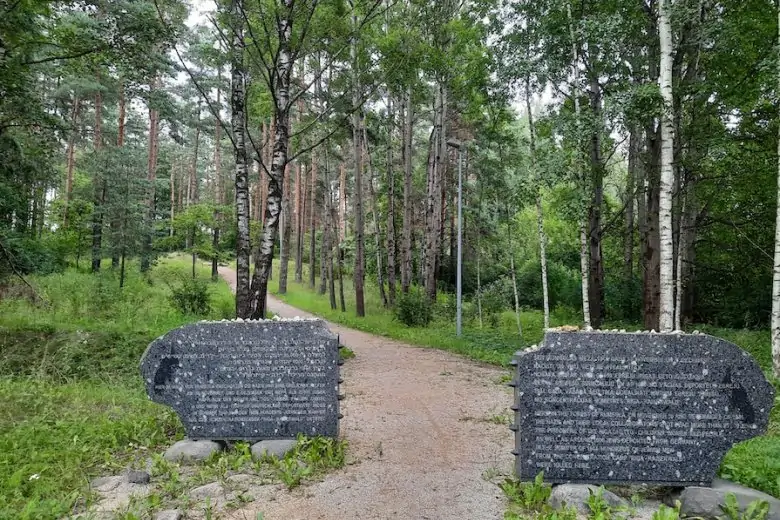
At the entrance, several stone plates tell the story of the Rumbula tragedy and establishment of the memorial in Latvian, English, German, and Hebrew. The path leads to the central part of the memorial, which is shaped in the form of the Star of David with a menorah (Jewish candlestick) above it. The menorah is surrounded by uncut stones where names of slaughtered Jews are engraved. Several cobblestones bear the names of Riga’s ghetto streets. There are also several mass graves in the territory of the memorial, which are marked with concrete borders.
Why visit
The Jewish Memorial at Rumbula is one of the most significant Holocaust remembrance sites in Latvia and a deeply moving place to visit. It commemorates the thousands of Jews who were murdered here during World War II and offers visitors a space for reflection, education, and remembrance.
The memorial’s thoughtful design, multilingual information panels, and symbolic structures help convey both the scale of the tragedy and the individuality of the victims. It is an important stop for anyone interested in European history, Jewish heritage, or Holocaust education.
Historical highlight
In late November and early December 1941, more than 25,000 Jews from the Riga Ghetto, along with deportees from Germany, were brought to the nearby Rumbula Forest and executed, making it one of the largest single mass killings of Jews during the Holocaust.
How to get there
To reach the Holocaust Memorial in Rumbula, take bus No. 18 to the stop “Rumbula.” From there, walk a short distance back along the road until you see a large metal half-gate on the side of the street. Continue along the road until you come to a metal wall bearing inscriptions in four languages, then enter the memorial grounds.