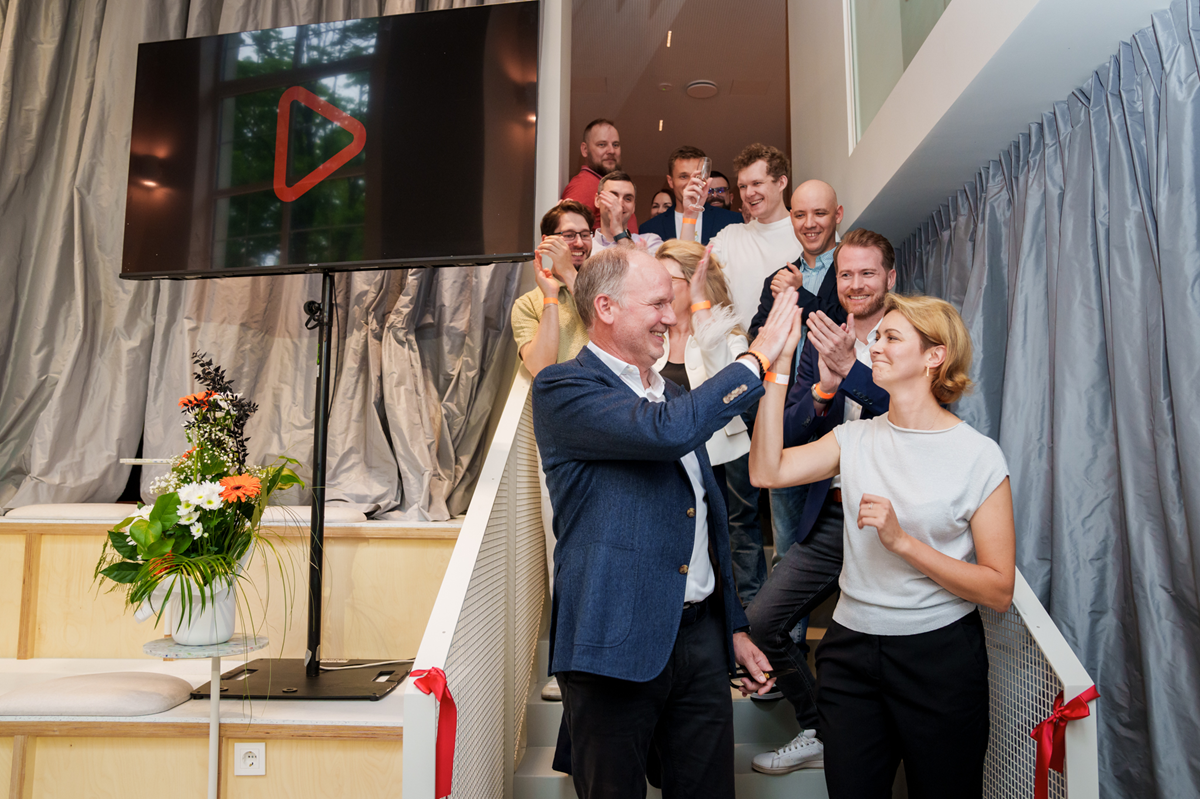
German IT and cybersecurity company q.beyond has been operating in Riga for six years, building a team of more than 100 professionals and making the city an increasingly important part of the group's international operations. From Riga, the company delivers a wide range of IT and cybersecurity services, while its local Security Operations Centre provides around-the-clock protection for clients across Europe. As part of its international growth strategy, q.beyond is expanding its activities in Latvia and sees Riga as a key location for future growth in cybersecurity and digital innovation.
Interview with Pāvels Ignatovičs, Sales and Business Development Manager at q.beyond Riga
.png)
q.beyond combines expertise in cloud, cybersecurity, AI and managed IT services. How would you describe the company's strengths, and what kinds of challenges do you help customers solve every day?
That list covers it pretty well, but each of those boxes opens up into a lot more once you look closer. On cybersecurity we do the whole journey. We advise, we get companies compliant, we build the setup and then we run it around the clock from our SOC in Riga. On AI, we help organisations put it to real use in a way that stays reliable and keeps them on the right side of the EU AI Act. There's the Microsoft and SAP world too, the modern workplace, application management, keeping a client's IT alive with 24/7 and on-call support. And cloud, which these days is mostly about migration, running things properly and, more and more, sovereign European cloud. We can offer that last one because we own our data centres in Germany.
If I had to say what we do in one sentence: we operate, secure, comply and modernise our clients' IT, with the speed and innovation you get in Latvia and the reliability you expect from German engineering.
The other half of the answer is the people. We've built a team of more than a hundred here that can stand on its own, and that already means a lot to me. But we're never working alone. There are around a thousand colleagues and the experience of well over a thousand client projects sitting behind us in Germany. What clients tell us they value most is getting all of this from one partner, from the first strategy talk through the transformation and then the boring but critical part, keeping it running every day.

Cybersecurity has become one of the biggest priorities for businesses across Europe. Why is it no longer just an IT issue, and what standards, certifications and best practices should organisations look for when choosing a trusted cybersecurity partner?
Not long ago, cybersecurity was something you left to the IT department. That time is gone. The main thing that changed it is regulation. With NIS2, DORA, the Cyber Resilience Act and standards like ISO 27001, security has turned into a legal responsibility and not only a technical task. And here's the part many managers still don't fully feel, these rules put the responsibility at the very top of the company. If something goes wrong, it's the leadership that has to answer for it. That alone moved the topic onto the board's table.
So the real question becomes, how much security is enough? There isn't one answer that fits everyone. It depends on the business. You begin by understanding what really matters inside the company, what you simply cannot afford to lose, who is responsible for what, and only then do you decide which protections make sense. And you keep revisiting it, because the people attacking you never stop changing their methods.
This is where I'd say we're different. We know the regulatory side well and we have the certified people to back that up, but we don't start with tools. We start by looking at the business. Then our implementation team does the hard work of turning that into something real, and underneath all of it our SOC in Riga is running, 24 hours a day.
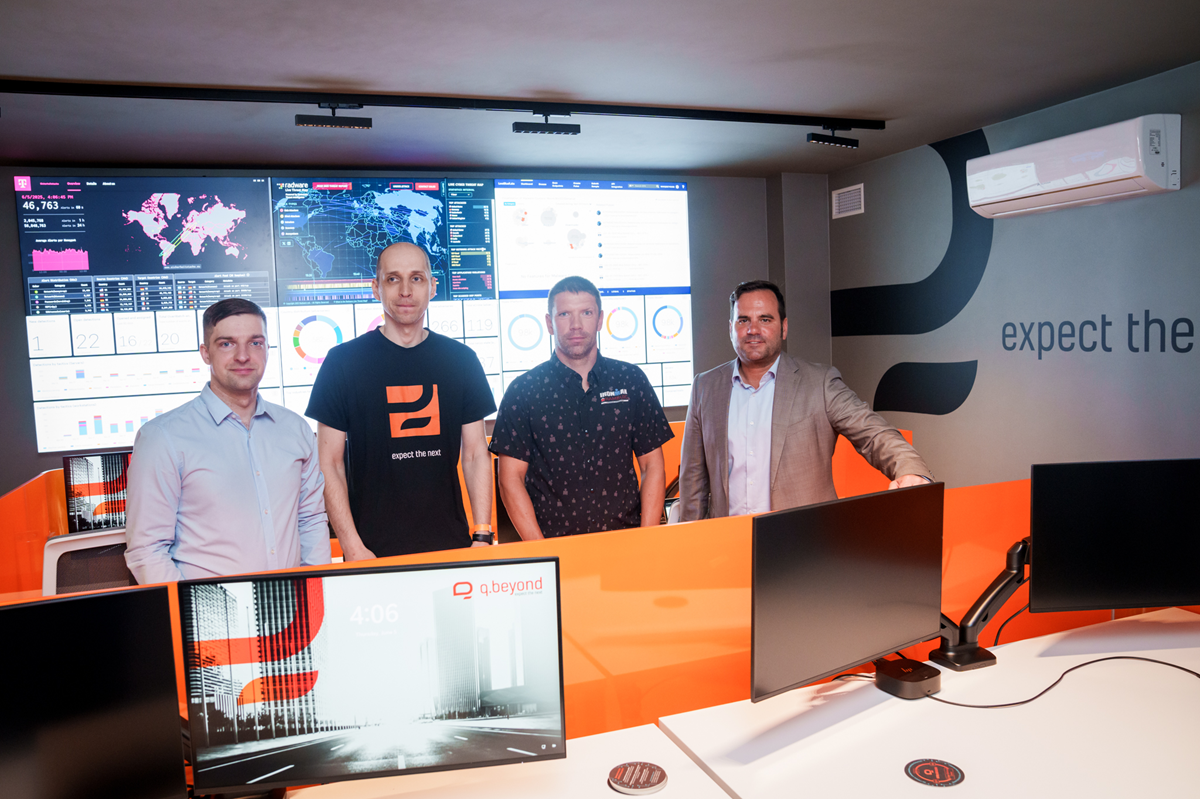
Attacks don't wait for Monday morning, so we don't either. That's really the point of a SOC. Someone is watching at three on a Sunday morning as well.
If you're choosing a partner, that's more or less the checklist: real certifications, people who understand the regulations, a team that can build and not just advise, and a true 24/7 operation behind you. A nice slide deck is not the same as someone defending your business at night.
q.beyond continues to grow its presence in Riga. What made the city the right choice for your operations, and what advantages have you found in Latvia's technology ecosystem and talent pool?
When people ask why Riga, I think the real answer is a mix of two things: trust and energy. Latvia is part of the EU and NATO, the legal side is stable and predictable, and for the work we do, security and data, that kind of trust matters more than anything else. Clients need to feel the ground under them is solid.
But this is not a quiet, sleepy place. There's a real tech energy here that you pick up on fast. The country went digital-first years ago, the startup scene is very much alive, and there's a strong engineering, problem-solving mindset in general. The talent is young, well educated and speaks several languages, German among them, which matters a lot to us considering where most of our clients are. And Riga simply sits well on the map, close to the Nordics and Western Europe, working almost the same hours as our colleagues in Germany.
There's one more reason it felt natural for us in particular. Riga has quietly turned into a real cybersecurity city. A lot of security and defence knowledge is concentrated here, including some serious international institutions on the NATO side. When you're building a cyber defence team, that's exactly the kind of environment you want around you.
You're planning to expand your team in Riga. What opportunities could unfold for new talents?
We've been here six years running IT for our German clients, and with more than a hundred people, I'd say we've made the point. So we are definitely not slowing down.
For the group as a whole, Riga is becoming our cyber defence hub, which tells you how much trust the centre places in this team.
But something bigger is happening now. To support our Group 2028 Internationalization Strategy, this year we started building our own business in Latvia, not only serving Germany from here, and we're putting the whole go-to-market together. The aim is to become the cybersecurity partner companies in Latvia turn to, from end to end, and then to grow from there into the wider Baltics.
For anyone thinking about joining us, this is a good moment to do it. We're hiring across security, the SOC, penetration testing, governance and compliance, and in cloud, Product Solutions (SAP, Microsoft) and AI as well. You'd be working to German enterprise standards, with real international exposure, but on a team that is still taking shape. The people who come in now won't be a small part of a finished machine. They'll be helping build it. You don't get that chance very often.
Looking ahead, how do you see the future of the Baltic technology ecosystem? Do you believe the region has the potential to become one of Europe's leading hubs for cybersecurity and digital innovation, and what role can Riga play in that journey?
I'm optimistic about it, and I don't think that's only local pride talking. If you pay attention to what's happening in the region, the Baltics keep coming up whenever people talk about where the interesting technology is being built, in fintech, and more and more in defence and security tech. Latvia has made a name for itself there.
Part of the reason is uncomfortable but simply true. This corner of Europe lives close to real threats, and that has pushed people here to take security seriously in a very practical, hands-on way. That kind of frontline experience is hard to imitate, and over time it becomes real expertise. Put that together with a fast, digital-first culture and people who are used to doing a lot with a little, and you have the ingredients of a real hub.
Riga sits right in the middle of it. It's where the talent, the universities, the big tech events and much of the security community come together. And the city itself is clearly reaching higher. You can hear it in the way Riga talks about its own future, wanting to be a modern, innovative Northern European capital, a proper smart city, with digital services and even cybersecurity woven into how it plans to run itself. So can the region become one of Europe's leading places for cybersecurity and digital innovation?
The way I see it, it has already earned a seat at that table, and Riga has every reason to be the city leading that conversation.