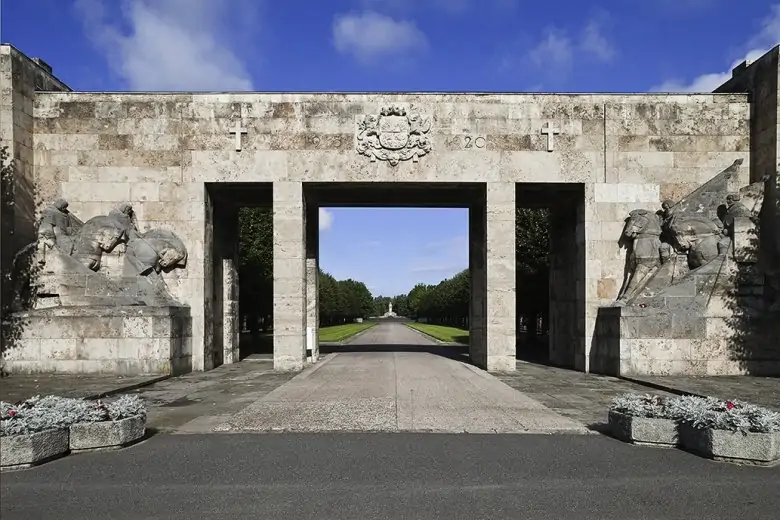
Riga Brethren Cemetery, also known as the Brothers’ Cemetery (Rīgas Brāļu kapi in Latvian), is one of Latvia’s most significant memorial sites and an outstanding example of monumental landscape architecture. Created to honour Latvian soldiers who lost their lives in the struggles for the country’s freedom, the memorial combines sculpture, architecture and carefully designed greenery in a powerful and contemplative setting.
Located in a quieter part of Riga, away from the busy historic centre, the cemetery offers visitors an opportunity to learn about important chapters of Latvian history while experiencing one of the country’s most impressive memorial ensembles.
A place of remembrance
Riga Brethren Cemetery is the final resting place of thousands of soldiers, particularly those who died during the First World War and the Latvian War of Independence. Rather than functioning simply as a military cemetery, the site was conceived as a unified memorial landscape dedicated to sacrifice, remembrance and Latvia’s struggle for statehood.
Visitors enter a carefully planned ensemble of avenues, terraces, lawns, sculptures and burial fields. The symmetrical layout gradually leads towards the monumental heart of the cemetery, creating a sense of procession and reflection.
Architecture and symbolism
The memorial is closely associated with Latvian sculptor Kārlis Zāle, who also created Riga’s Freedom Monument. His monumental sculptures form an essential part of the cemetery and use symbolic figures to express grief, courage, sacrifice and national identity.
One of the most recognisable elements is the monumental figure of Mother Latvia, overlooking the burial grounds. Together with the gates, sculptural groups, walls and landscaped surroundings, it gives the cemetery a distinctive character in which architecture and nature form a single memorial space.
Why visit?
For visitors interested in Latvian history, architecture and national identity, Riga Brethren Cemetery provides valuable context for understanding the events that shaped modern Latvia. Its connection with the First World War and the Latvian War of Independence makes it particularly meaningful alongside other historical sites in Riga.
The cemetery is also worth visiting for its artistic and architectural qualities. The monumental sculptures, formal landscaping and peaceful atmosphere make it very different from Riga’s museums and Old Town attractions. As this is an active memorial and burial site, visitors should maintain a respectful atmosphere during their visit.
Historical highlight
The origins of Riga Brethren Cemetery date to 1915, during the First World War, when Latvian Riflemen killed in battle began to be buried at the site. As Latvia subsequently fought for independence, the cemetery became increasingly associated with those who had sacrificed their lives for the emerging Latvian state.
The memorial ensemble was developed over the following decades and became one of the most ambitious monumental projects in Latvia. Its artistic design brought together architect Pēteris Feders, landscape architect Andrejs Zeidaks and sculptor Kārlis Zāle, creating a memorial where landscape, architecture and sculpture work together.
How to get there
Riga Brethren Cemetery is located in northern Riga, approximately 5 kilometres from the Old Town. It can be reached from the city centre by tram or bus, followed by a short walk to the entrance.
Allow enough time to walk through the entire memorial complex rather than visiting only its central monument. The site is largely outdoors, so comfortable footwear and clothing suitable for the weather are recommended. Visitors can also combine a trip to Riga Brethren Cemetery with other sights in northern Riga, including the nearby Great Cemetery and Mežaparks area.