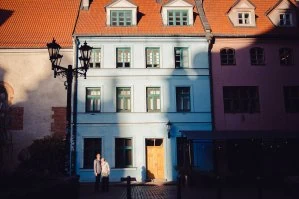
Riga is a city that reveals itself slowly. At first, you notice its skyline, church towers rising above Art Nouveau facades. Then you begin to feel its rhythm: thoughtful, creative, unpretentious. Riga is not loud. It does not compete for attention. It invites discovery.

Welcome to Riga!
For centuries, our city has stood at the crossroads of Northern and Eastern Europe shaped by trade, ideas, music, architecture and independent spirit. Today, Riga is a vibrant European capital where history and contemporary culture exist side by side, where young designers work in former industrial quarters, where world-class opera meets experimental art, and where every season reshapes the city’s character.
We warmly invite you to experience Riga in person, with friends or family. Walk our streets, enter our galleries, listen to our music, meet our people. Discover why those who come to Riga often return.
.png?w=780&mode=3%3A2%7Ccrop&s=8829f14e4da597aea946f54fcc048d9e)
Riga - Europe’s Hidden Gem
In an era of overexposed destinations, Riga remains refreshingly authentic.
Recognised for its UNESCO-listed historic centre and extraordinary Art Nouveau architecture, Riga combines architectural elegance with Nordic minimalism and Baltic calm. Yet beyond its façades lies a city driven by creative energy.
Contemporary art thrives in independent galleries and institutions. While classical excellence resonates at the Latvian National Opera and Ballet. The city’s museums, including the Latvian National Museum of Art, connect tradition with experimentation.
Riga’s creative identity extends beyond institutions. It lives in design studios, fashion ateliers, music venues and neighbourhood cafés. Young Latvian designers are gaining international attention for their refined, sustainable approach. Former industrial areas have transformed into cultural quarters. Markets and public spaces become meeting points for artists, entrepreneurs and visitors alike.
What makes Riga truly special, however, is its human scale. You can cross the city centre on foot, move from medieval streets to riverside promenades within minutes, and experience both vibrant cultural life and quiet green parks in the same afternoon. The Baltic Sea lies less than half an hour away.
Riga does not overwhelm - it invites.

Riga Through the Seasons - 2026 Highlights
Riga changes with the seasons, and each offers a different reason to visit.
Spring awakens the city with gallery openings, design events and outdoor terraces filling with life. Summer brings music festivals, open-air concerts and long Nordic evenings filled with light. Autumn marks the start of a rich theatre and concert season, while winter transforms Riga into a luminous northern fairytale with Christmas markets and cultural premieres.
Among the highlights of this year’s programme:
International art exhibitions and contemporary culture festivals:
Riga Art week May 25 - 31, more HERE
Riga Contemporary Art Fair July 2- 5, more HERE
Riga 825 Birthday celebration and summer music Festivals from August 1 - 30
A dynamic autumn music and theatre and performance programme:
Riga Music week in autumn, November 4-6
Winter concerts and festive cultural celebrations
Riga Christmas markets and light trails – December
Whether you come for art, architecture, fashion, music or simply the atmosphere of an authentic European city, Riga offers space to discover and to return.
For a full overview of Riga’s full programme of events throughout the year, including festivals, exhibitions, performances and city-wide cultural initiatives, visit HERE
See you in Riga!

Riga’s Contemporary art guide
Riga’s contemporary art scene unfolds quietly but with striking clarity - much like the city itself. It is a place where ideas are tested, boundaries are questioned, and artistic voices emerge with confidence rather than noise.
Across the city, independent galleries, artist-run spaces and cultural institutions present works that move between the local and the global. Here, Baltic narratives meet international discourse, and exhibitions often reflect a thoughtful, research-driven approach to art-making.
What defines Riga is not scale, but depth. You will find experimental practices alongside refined curatorial concepts, often in unexpected settings - from former industrial buildings to intimate exhibition spaces.
For those arriving from the Venice Biennale, Riga offers a different rhythm of discovery: less spectacle, more proximity. A chance to engage with art up close, to meet the context behind the work, and to experience a contemporary art scene that is both grounded and forward-looking.

Riga Street Art Guide
In Riga, art doesn’t end at gallery walls - it continues out into the streets, where the city becomes a canvas in its own right. Layered onto historic façades and hidden within courtyards and underpasses, street art reveals a more spontaneous, unfiltered side of the city.
What began as a marginal practice has grown into an integral part of Riga’s visual identity. Murals, graffiti and site-specific interventions animate the urban landscape, often engaging with themes of identity, memory and freedom. These works do not seek to dominate the city, but to converse with it - creating moments of surprise within everyday surroundings.
Riga’s street art offers a shift in perspective. Here, contemporary expression is encountered without mediation - in public space, at human scale, and woven into the rhythm of the city.
To explore Riga through its street art is to step slightly off course - and discover a city that reveals itself in fragments, details and unexpected encounters.

Art Nouveau
If contemporary art in Riga speaks in subtle, conceptual tones, its architecture tells a more ornate story. At the turn of the 20th century, during a period of rapid growth and cultural confidence, the city became one of Europe’s most important centres of Art Nouveau. Today, this legacy defines much of Riga’s visual identity.
Within a short walk from the Old Town lies the so-called Quiet Centre - a neighbourhood where entire streets unfold as a living architectural exhibition. Here, façades are layered with symbolism and imagination: sculpted figures, floral motifs, and intricate ornamentation that reward slow looking.
At its heart is Alberta Street, often considered the city’s Art Nouveau showcase. Built in the early 1900s, it brings together a remarkable concentration of buildings where each facade feels like an individual artwork. Nearby streets continue this narrative, revealing both richly decorative and more restrained interpretations of the style.
Riga holds one of the largest collections of Art Nouveau architecture in Europe, with nearly a third of its central buildings shaped by this movement. Yet what makes the experience distinctive is not only the quantity, but the accessibility - this is architecture encountered at eye level, woven into everyday life.
For visitors arriving from the Venice Biennale, Riga offers a different kind of immersion. Here, the dialogue between art and environment is not temporary or curated - it is embedded in the city itself.
To explore Riga’s Art Nouveau district is to step into a moment when architecture became expression - and to see how that moment continues to define the city today.

The most Insta-worthy spots in Riga
If a moment isn’t captured, did it even happen? In Riga, you won’t have to choose - the city is effortlessly photogenic at every turn.
From fairytale-like Old Town streets to striking Art Nouveau façades and unexpected contemporary details, Riga offers a rich visual landscape for those who see travel through the lens. Here, contrasts create the magic: medieval towers beside modern design, quiet courtyards opening into vibrant city scenes, soft northern light shifting the mood throughout the day.
Whether you’re framing the perfect architectural shot, capturing everyday city life, or simply chasing beautiful light, Riga rewards curiosity and a keen eye.
For visitors inspired by the visual storytelling of the Venice Biennale, the city becomes more than a backdrop - it becomes part of the narrative.

World-class food scene
Where to eat in Riga? The better question might be - where to begin.
Riga’s food scene reflects the city itself: layered, creative and quietly confident. Here, traditional Latvian flavours meet contemporary techniques, and local ingredients are reinterpreted with a modern sensibility. From early-morning pastries in neighbourhood bakeries to refined dining experiences in elegant settings, the city offers a spectrum of tastes and atmospheres.
You’ll find specialty coffee shops, natural wine bars, craft breweries and chef-driven restaurants coexisting within a compact, walkable centre. Some are well known, others intentionally understated - discovered through curiosity rather than signposts.
For those drawn to the cultural richness of the Venice Biennale, Riga’s culinary landscape offers a similar experience: thoughtful, diverse and rooted in a strong sense of place.
Take your time, follow your instincts, and let the city reveal its flavours.

Michelin Guide restaurants
Riga’s culinary scene has earned international recognition, with the Michelin Guide highlighting the city as an emerging destination for thoughtful, high-quality dining.
While Riga is home to two Michelin-starred restaurants, a growing number of establishments are also included as Recommended or awarded the Bib Gourmand distinction - recognising both creativity and exceptional value. Together, they reflect a dining culture that is refined yet unpretentious, rooted in local ingredients and shaped by global perspectives.
Menus often follow the rhythm of the seasons, with chefs drawing inspiration from Baltic nature - forests, fields and coastline - and translating it into precise, contemporary cuisine. Each dish becomes a narrative of place, craftsmanship and restraint.
Whether you seek a fine dining experience or a more relaxed yet equally considered meal, Riga invites you to explore its culinary identity at the highest level.

Hidden Gems of Riga
Beyond the well-known landmarks, Riga reveals itself in quieter, more intimate ways. Step just a little off the main routes, and the city begins to shift, becoming more personal, more layered, and full of unexpected detail.
Hidden courtyards, independent cafés, creative квартals and overlooked architectural fragments tell stories that rarely make it into guidebooks. These are places shaped by local rhythms, where past and present meet without display, and where discovery feels entirely your own.
Riga’s lesser-known spaces are not designed as attractions, but as lived environments. This is precisely what makes them compelling: authenticity over spectacle, atmosphere over crowds.
For those arriving from the Venice Biennale, where exploration often happens within curated frameworks, Riga offers a different kind of experience - one that unfolds organically, through wandering and attention.
Take a turn you hadn’t planned. Pause where nothing is signposted. In Riga, the most memorable moments are often the ones you find by chance.
.jpg?w=300&mode=3:2|crop)

.jpg?w=300&mode=3:2|crop)