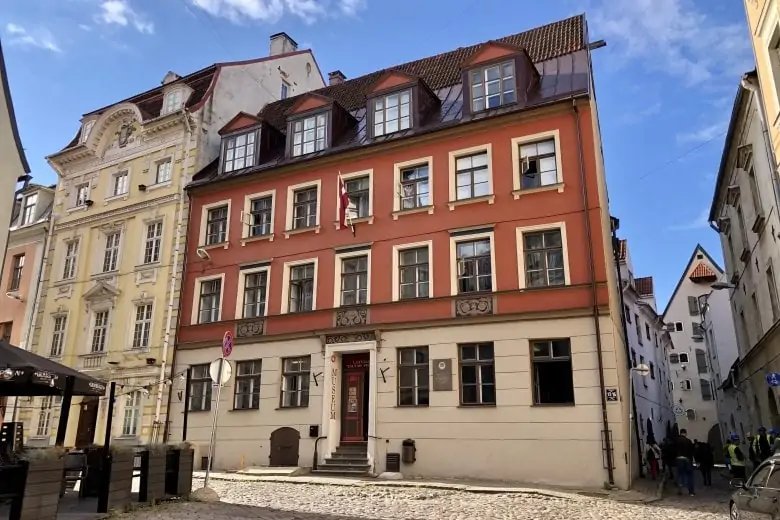
The Popular Front Museum is one of the departments of the National History Museum of Latvia and it is a modern history archive with specific documents and display items, reflecting the Latvian people's struggle for liberty at the end of the 20th century, to be known forever as the third Period of Reawakening or the Singing Revolution.
The interior of the museum is fashioned in the style of the 1980s and 1990s, reminding of the times when the museum's rooms served as headquarters for the Popular Front. The exhibition is displayed on three floors, and is visually interconnected with the symbol of Auseklis that is stylistically integrated in the museum's interior and specific design elements. Thanks to contemporary design and technology, visitors can not only learn new information, but also relive the emotional events reflected at the exhibition. With the help of a touch screen, the museum's visitors can go through various materials from the archives of the Popular Front. Interactive games and attractive design make the museum interesting also for younger visitors.
Why visit
The Popular Front Museum offers a powerful insight into Latvia’s path to restored independence and the events of the late 1980s and early 1990s. Through photographs, documents, personal belongings and multimedia exhibits, visitors can learn about the peaceful movement that helped bring an end to Soviet rule.
The museum is especially meaningful for those interested in modern history, politics and social movements. Its exhibitions help explain key events such as the Singing Revolution, the Baltic Way and the January 1991 Barricades, placing Latvia’s experience within the broader context of the Baltic independence movement.
Historical highlight
The museum is housed in the former headquarters of the Popular Front of Latvia at Vecpilsētas Street 13/15 in Old Town Riga. From 1989 onwards, this historic building became the centre of one of the most important movements in Latvia’s modern history.
The building itself dates back to the 17th century and has served many purposes over the centuries. Today, it preserves the atmosphere of the period when Latvia regained its independence, offering visitors an authentic connection to the events of the Third Awakening.
How to get there
The museum is best reached on foot while exploring the Old Town, although several tram, bus and trolleybus stops are located nearby for visitors arriving from other parts of the city.