The ancient Latvians followed the rhythms of the sun and the land. Their year was a cycle marked by the solstices and equinoxes, with seasonal festivals celebrating work and rest in between. Many of these Latvian traditions are still celebrated today. In Riga, you can experience them alongside local folklore groups, with masks, songs, bonfires and traditional festive food. Planning your visit: The dates mentioned here are the traditional festival dates. Celebrations in Riga often take place on the nearest weekend, so check the LiveRiga events calendar for the latest details. Jāņi, Latvia’s midsummer celebration, is the exception: 23 and 24 June are public holidays, with the main festivities taking place on the night of 23 June.

Meteņi - Latvia’s Farewell to Winter
Traditional date: 6 February or seven weeks before Easter
Sledging downhill, dressing up in masks and sharing freshly baked savoury pastries — this is how Latvians celebrate Meteņi and welcome the approaching spring. The festivities have a purpose, too: singing, folk dancing and visiting neighbours are all ways to invite good fortune and a plentiful harvest. Even a sledge ride once held a promise for the growing season: the further you travelled, the taller your flax would grow that summer.
At Meteņi celebrations, you may encounter budēļi, traditional masked revellers, and other costumed characters going from house to house with noise, jokes and games. The feast is equally generous, featuring pork, barley porridge, flatbreads and pīrāgi, traditional Latvian savoury pastries. And feel free to set modesty aside - boasting is part of the tradition! Who has the finest farm, the plumpest livestock and the best harvest? The bolder the claims, the better: people believed that speaking of abundance could help bring it into being.
Some old Latvian folk beliefs may take you by surprise. In certain regions, children were given pig’s snout to eat to improve their handwriting, while sewing and spinning were put aside to keep misfortune away from the household. If you find yourself at a Meteņi celebration, join the games, take a sledge ride and indulge in a little boasting - it is all part of the occasion!

The spring equinox - swinging, onion-dyed eggs and egg rolling contests
Traditional date: around 20 March
Lielā diena, Latvia’s traditional spring equinox celebration, begins early in the morning as people gather to greet the sunrise. Day and night are nearly equal in length, and the days ahead grow longer as the nights become shorter. In Latvian tradition, this is a celebration of nature’s awakening and renewal, with songs and rituals helping everyone shake off winter, too.
There is little time for sleeping in: the morning calls for welcoming the sun, washing your face in running water and eating a few cranberries. Folk beliefs promise health, beauty and rosy cheeks, though an early start and a splash of cold water may leave you feeling refreshed regardless. Gentle tapping with pussy willow and budding birch branches carries wishes for health and strength in the coming spring.
Once the sun is up, it is time for the swings - the higher, the better! Swinging was believed to encourage taller flax and keep mosquitoes away in summer. Eggs play an equally important role in the festivities: dyed with onion skins and decorated with leaf and grass patterns, they are rolled in games and tapped against one another to see whose shell is strongest. Round, sun-shaped pastries are also brought along to share after the sunrise celebrations.
Many of these customs are now familiar as Latvian Easter traditions. Lielā diena offers a chance to experience them at the spring equinox itself. Rise early, join the singing and take a turn on the swings.

Midsummer – the shortest night, flower crowns, bonfires and staying up to greet the sunrise.
Dates: 23–24 June (public holidays; Līgo Eve is celebrated on 23 June, followed by Jāņi on 24 June)
The scent of meadow flowers, oak-leaf wreaths and songs with a refrain even first-time visitors soon pick up - līgo, līgo! Jāņi, Latvia’s midsummer festival, is one of the country’s most eagerly awaited celebrations. Nature is in full bloom, daylight lingers late into the evening, and revellers prepare to stay awake until sunrise.
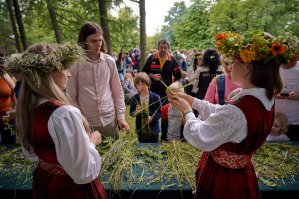
Preparations begin with gathering wildflowers and grasses and weaving wreaths. Homes and gardens are decorated with leafy birch branches, flowers and oak boughs. Women traditionally wear wreaths of flowers and grasses, while men wear oak-leaf wreaths - especially anyone named Jānis. Plants gathered around the summer solstice were believed to hold special powers of protection and blessing. The circular shape of the sun is reflected in both the wreaths and the golden wheel of Jāņi cheese, served alongside pīrāgi, traditional savoury pastries, and beer.
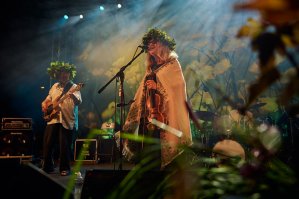
As the sun sets, a bonfire is lit, with singing, folk dancing and socialising continuing around it. Jāņi songs are full of humour: verses might praise the hosts or playfully tease fellow revellers. Fire is traditionally associated with protection and purification, and the flames are kept burning until morning, symbolically preserving the light through the darkest hours.
This is also a night of magic and folklore. An oak-leaf wreath is tossed into an apple tree to predict how many years remain until marriage, while finding the legendary fern flower promises happiness. Ferns do not actually bloom, of course - making the search a perfect excuse for a romantic walk together. According to Latvian folk beliefs, the morning dew at Jāņi brings health and beauty.
If you are visiting Riga during Jāņi, weave a few flowers into a wreath, taste the traditional caraway cheese and join the celebrations. You do not need to know every song - your first “līgo” is enough to join in.

Miķeļi - Latvia’s Autumn Harvest Festival
Traditional date: 29 September (the autumn equinox falls around 23 September)
The scent of freshly baked bread, baskets of rosy apples and market stalls brimming with autumn produce. Miķeļi is Latvia’s traditional harvest festival - a time when the busiest days in the fields draw to a close and people gather to enjoy the fruits of their labour. In the past, large seasonal markets offered a chance to stock up for winter, meet neighbours and find something useful for the farm.
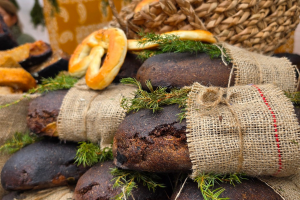
The end of the harvest was marked by apjumības celebrations and one particularly distinctive ritual: “catching Jumis”. In Latvian folklore, Jumis represents fertility and abundance, and these rituals sought his blessing for the following year’s crops. Gratitude for the harvest continued around a generous table, with freshly baked bread, flatbreads, home-brewed beer and hearty festive dishes. The first bites of food and a sip of beer were offered to the household’s guardian spirits, in the hope of ensuring lasting prosperity.
Miķeļi was also a time to watch the weather: rain was said to promise a mild winter, while a northerly wind foretold cold weather and deep snow. Other folk beliefs reflected more practical concerns. To keep mice and rats away from winter stores, people walked through every corner of the house on Miķeļi morning carrying a piece of bread. Bringing anything home from a neighbour’s house was discouraged - you might bring their mice along with it!
If you are visiting Riga during Miķeļi, explore an autumn harvest market, sample local bread, cheese and honey, and pick out a juicy apple. It is a chance to discover Latvia’s autumn flavours and a celebration that combines pride in a plentiful harvest with hopes for another abundant year.

Mārtiņi - Welcoming Winter
If a bear, a crane or an unrecognisable creature appears at your door, the Mārtiņbērni may have arrived! In Latvian tradition, Mārtiņi marks the end of autumn farm work and the beginning of winter. The grain should be threshed, the fields ploughed and winter stores ready. The quiet season of remembrance for ancestral spirits draws to a close, and homes fill once more with songs, folk dancing and lively celebrations.
Mārtiņi opens Latvia’s traditional winter masking season. Groups known as Mārtiņbērni visit homes dressed as animals and other unusual characters. The aim is to remain unrecognisable, using fur coats turned inside out, disguised voices and an unfamiliar walk. The visitors sing, dance and joke, while their hosts welcome them with food and drink. These masked guests were believed to bring blessings to the household and drive away evil.
With the season’s work complete, a generous feast is well deserved. Roast rooster or goose takes pride of place on the Mārtiņi table, alongside bread, pīrāgi - traditional savoury pastries - apples, honey and beer. It is a time to give thanks for the harvest and gather around the table before the long winter evenings set in.
People also looked for clues to the future. A misty Mārtiņi day was said to promise a mild, wet winter, while frost on the branches foretold a good fruit harvest the following year. Finding a future spouse called for a different approach. One fortune-telling custom involved eating a herring’s head before bed, hoping to dream of the person who would offer water to quench your thirst.
If you are visiting Riga during Mārtiņi, join the festivities and take a closer look at the masked characters - a rather shy dancer might be hiding beneath that bearskin. And if you decide to dress up yourself, remember: the harder you are to recognise, the better your disguise!

Winter Solstice - Log Dragging, Masks and the Return of Light
Traditional date: 21-22 December
In Latvian tradition, the longest night of the year is celebrated with fire, songs and a generous feast. The winter solstice marks a turning point: darkness has reached its peak, and the days will gradually grow longer. To help welcome back the light, everyone has a part to play - dragging a wooden log, lighting a fire and filling the home with activity.
One of the most distinctive Latvian winter solstice traditions is log dragging. A heavy wooden log is pulled on ropes around the farmyard or from house to house, symbolically gathering the hardships and misfortunes of the past year. At the end of the procession, it is burned, leaving old troubles in the flames and making room for a fresh start. The ritual is also associated with strengthening the sun and encouraging fertility, combining farewell with hope for the year ahead.
Meanwhile, masked visitors known as ķekatnieki arrive dressed as bears, cranes and other characters, their identities carefully concealed. They sing, dance, play tricks on their hosts and bring blessings to the household. Indoors, delicate straw or reed ornaments called puzuri hang from the ceiling, their geometric shapes turning gently in the air. These traditional Latvian decorations are associated with harmony in the home and the order of the world.
There is room at the festive table for family and visitors alike. Folk beliefs call for nine or even twelve dishes to ensure abundance in the coming year. Grey peas, pork, pīrāgi - traditional savoury pastries - and other hearty dishes fill the table. Be sure to finish the peas: tradition says this will spare you tears in the year ahead. After the feast, it is time for fortune-telling. Objects hidden beneath upturned bowls offer clues to the future: a ring promises love, a coin prosperity and a key a new home.
If you are visiting Riga around the winter solstice, join a log-dragging celebration or learn to make a puzuris ornament and experience these traditions for yourself.